Skip to content

Encyclopedia

125 short entries on the sky, music and technology, explained simply.

Music

Chord

Three or more notes sounding together.

C major
C–E–G
A minor
A–C–E
Read more

The basic chord, the triad, is built by stacking thirds: a root, the note a third above it and the note a fifth above it. If the first third is major, the chord is major and sounds bright; if it is minor, it sounds darker. Songs move from chord to chord in progressions; one of the most common in pop is I–V–vi–IV, which in C is C, G, A minor, F. Adding more notes, such as the seventh, gives richer colors heard a lot in jazz.

Related: Interval, Key, Harmonics

Music

A440 tuning

The international standard that sets the A above middle C at 440 vibrations per second.

Frequency
440 Hz
Standard
ISO 16
Read more

For different instruments to play in tune together, they need a shared reference. Today nearly everyone tunes the A above middle C to 440 hertz, or 440 vibrations per second, as set by the international standard ISO 16. Before standardization, the reference varied by era and city. Some orchestras tune slightly higher, at 442 or 443 Hz. Electronic tuners and tuning apps use this A as their starting point.

Related: Note, Octave, Harmonics, Hertz (Hz)

Play Note of the day →

Constellation

Aquila

A summer constellation whose star Altair spins so fast it is flattened.

Brightest star
Altair
Best season (Northern Hemisphere, evenings)
summer (Jul–Sep)
Visibility
both hemispheres
Read more

The Eagle soars along the Milky Way with outstretched wings. Its main star, Altair, is fairly close, about 17 light-years away, and spins once in less than 10 hours, so fast that it bulges at the equator. Altair is the southern corner of the Summer Triangle with Vega and Deneb. In Greek myth, the eagle carried Zeus's thunderbolts. In East Asian tradition, Altair and Vega are two lovers separated by the river of the sky.

Related: Lyra, Cygnus, Delphinus

Play Hidden constellation →

Technology

Algorithm

A precise, ordered series of steps for solving a problem or completing a task.

Everyday example
a cooking recipe
Name origin
the Persian mathematician al-Khwarizmi (9th century)
Read more

An algorithm is a recipe: clear instructions that, followed in order, lead to a result. It does not need a computer; long division with pencil and paper is an algorithm too. But computers run them at astonishing speed: sorting a list, finding the shortest route on a map or picking which video to recommend are all algorithms. A good one is both correct and efficient. The word comes from al-Khwarizmi, a 9th-century Persian mathematician.

Related: Artificial intelligence, Encryption, Image compression

Constellation

Andromeda

An autumn constellation hosting the Andromeda Galaxy, the most distant object visible to the naked eye.

Brightest stars
Alpheratz and Mirach, nearly tied
Best season (Northern Hemisphere, evenings)
autumn (Oct–Dec)
Visibility
Northern Hemisphere; also from the southern tropics
Read more

Andromeda branches off one corner of the Great Square of Pegasus in two chains of stars. Its treasure is the Andromeda Galaxy (M31), a spiral galaxy similar to ours and probably a bit larger, about 2.5 million light-years away. Under dark skies it appears to the naked eye as an elongated smudge, the farthest thing most people can see without instruments. In Greek myth, Andromeda was a princess chained to a rock and rescued by Perseus.

Related: Pegasus, Perseus, Cassiopeia, Galaxy

Play Hidden constellation →

Astronomy

Light-year

The distance light travels in one year: a unit of distance, not time.

Equal to
about 9.46 trillion km
Speed of light
about 300,000 km/s
Read more

Light is the fastest thing there is, moving at nearly 300,000 kilometers per second. In a year it covers about 9.46 trillion kilometers, a distance called a light-year. It lets us talk about vast distances without endless zeros. It also carries a neat idea: when you look at a star 100 light-years away, you see light that left it 100 years ago. Looking far away means looking back in time.

Related: Astronomical unit, Proxima Centauri, Galaxy

Technology

API

A set of rules that lets two programs talk to each other and request information or services.

Stands for
Application Programming Interface
Read more

An API is like a restaurant menu: it tells you what you can order and how, without letting you into the kitchen. When a weather app shows a forecast, it usually asks a weather service's API, which replies with data in an agreed format. APIs let programs connect without knowing each other's inner workings; thanks to them, a site can show a map, take a card payment or let you sign in with another account.

Related: The cloud, Open source, MIDI

Music

Harmonics

Higher frequencies that sound along with the main note and give it its color.

Series for A at 110 Hz
110, 220, 330, 440, 550 Hz…
Read more

A vibrating string does not move at just one frequency: besides the fundamental, it also vibrates at 2, 3, 4 and more times that frequency. Those extra tones are harmonics, or overtones. We do not hear them separately, but their balance defines each instrument's timbre. The harmonic series also explains why some intervals sound consonant: the octave (2 to 1) and the fifth (3 to 2) appear among the first harmonics. On a guitar, lightly touching a string over certain frets brings out isolated harmonics.

Related: Timbre, Octave, Interval, Frequency

Astronomy

Asteroid

A rocky or metallic body, smaller than a planet, that orbits the Sun.

Main location
asteroid belt, between Mars and Jupiter
Known asteroids
more than a million
Read more

Asteroids are fragments that never came together into a planet. Most live in the main belt between Mars and Jupiter, but others follow all sorts of orbits, including some that pass near Earth and are carefully tracked. They range from boulders a few meters wide to bodies hundreds of kilometers across. The largest in the belt, Ceres, is big enough to count as a dwarf planet. Unlike comets, they have little ice to evaporate, so they do not grow tails.

Related: Ceres, Comet, Fireball, Yarkovsky effect

Constellation

Auriga

The charioteer of the winter sky, a pentagon of stars led by bright Capella.

Brightest star
Capella
Best season (Northern Hemisphere, evenings)
winter (Dec–Mar)
Visibility
Northern Hemisphere
Read more

Auriga, the charioteer, forms an easy pentagon of stars north of Orion on winter evenings. Capella, its leading star, is the sixth-brightest in the night sky; it looks like one yellow star but is really two pairs of stars. One corner of the pentagon, Elnath, is shared with Taurus as the tip of one of the bull's horns. Because Auriga lies across the Milky Way, binoculars show several open star clusters.

Related: Taurus, Gemini, Perseus

Play Hidden constellation →

Star

Betelgeuse

A red supergiant marking Orion's shoulder that will one day explode as a supernova.

Type
red supergiant
Constellation
Orion
Distance
about 500 to 700 light-years (uncertain)
Read more

Betelgeuse is one of the largest stars visible to the naked eye: placed where the Sun is, it would reach past the orbit of Mars. Its brightness varies, and in late 2019 and 2020 it faded so much that it made headlines; astronomers later linked much of that dimming to a cloud of dust the star itself had thrown off. It is in a late stage of life and will end as a supernova, but no one knows when, and it could still be a very long time.

Related: Orion, Sirius, Sun

Play Which planet am I? →

Astronomy

Fireball

An exceptionally bright meteor, brighter than the planet Venus.

Read more

A fireball, or bolide, is a shooting star on a grand scale: a larger-than-usual chunk of rock or metal that glows so brightly as it enters the atmosphere that it can light up the landscape and leave a trail lasting seconds. Some break apart in flashes or even produce a boom. If a piece survives to reach the ground, that rock is called a meteorite. In 1969 the Allende meteorite fell in Chihuahua, Mexico; it is one of the most studied in the world.

Related: Meteor shower, Asteroid

Constellation

Boötes

A kite- or ice-cream-cone-shaped constellation led by bright Arcturus.

Brightest star
Arcturus
Best season (Northern Hemisphere, evenings)
late spring and summer (Apr–Jul)
Visibility
both hemispheres
Read more

In myth, Boötes is the herdsman driving the Great Bear around the sky. Its shape looks like a kite or an ice-cream cone, and at the base shines Arcturus, an orange giant and the brightest star in the northern celestial hemisphere. The classic trick to find it: follow the curve of the Big Dipper's handle and “arc to Arcturus.” In early January, the Quadrantid meteor shower radiates from near here.

Related: Ursa Major, Corona Borealis, Hercules

Play Hidden constellation →

Moon

Callisto

A dark, icy moon of Jupiter with one of the most heavily cratered surfaces in the solar system.

Diameter
about 4,821 km
Planet
Jupiter
Size rank
third-largest moon in the solar system

Image: NASA/JPL/DLR

Read more

Callisto is the outermost of Jupiter's four Galilean moons. It has seen almost no geological activity, so its surface keeps a record of ancient impacts, crater on top of crater. It is the third-largest moon in the solar system, nearly as wide as Mercury. Because it orbits outside Jupiter's harshest radiation belts, it has been suggested as a possible base for future human exploration.

Related: Jupiter, Ganymede

Play Which planet am I? →

Constellation

Canis Major

The big dog following Orion, home to Sirius, the brightest star of the night.

Brightest star
Sirius
Best season (Northern Hemisphere, evenings)
winter (Jan–Mar)
Visibility
both hemispheres
Read more

In Greek myth, Canis Major is one of Orion's hunting dogs. Its star Sirius is unmistakable: the brightest in the night sky, only 8.6 light-years away. Near the horizon it often twinkles in flashes of color because of turbulence in our atmosphere. To find it, follow Orion's Belt downward. The constellation has other bright stars too, such as Adhara and Wezen, plus the cluster M41, nice in binoculars.

Related: Sirius, Orion, Apparent magnitude

Play Hidden constellation →

Constellation

Cassiopeia

A W-shaped (or M-shaped) constellation that circles the north celestial pole.

Brightest stars
Schedar and Gamma Cassiopeiae, about equally bright
Best season (Northern Hemisphere, evenings)
autumn (Oct–Dec)
Visibility
Northern Hemisphere
Read more

Five stars make Cassiopeia's W, easy to pick out on autumn nights. It sits opposite the Big Dipper across Polaris, so when one is low the other is high, a useful trick for finding north. It lies across the Milky Way, and binoculars reveal many star clusters. In Greek myth, Cassiopeia was a boastful queen, mother of Andromeda, condemned to circle the sky, sometimes upside down.

Related: Andromeda, Perseus, Ursa Minor, Pegasus

Play Hidden constellation →

Astronomy

Zenith

The point in the sky directly above your head.

Read more

Draw a straight line up from where you stand and you hit the zenith. Everyone has their own, since it depends on location. In the tropics, the Sun passes through the zenith twice a year, and at that noon upright objects cast almost no shadow. Astronomers use it to measure altitude in the sky: something on the horizon sits at 0°, something at the zenith at 90°.

Related: Nadir, Ecliptic

Dwarf planet

Ceres

The largest object in the asteroid belt and the only dwarf planet in that region.

Diameter
about 940 km
Location
asteroid belt, between Mars and Jupiter
Discovery
1801

Image: NASA/JPL-Caltech/UCLA/MPS/DLR/IDA

Read more

Ceres was the first object found in the asteroid belt, in 1801, and for a while it was listed as a planet. Today it is a dwarf planet: big enough to be nearly round, but sharing its orbit with countless asteroids. From 2015 to 2018 NASA's Dawn spacecraft studied it up close and found dazzling bright spots inside Occator crater, salt deposits that most likely welled up from briny material below the surface.

Related: Pluto, Asteroid, Mars

Play Which planet am I? →

Technology

Encryption

Scrambling information with a key so only someone with the right key can read it.

Everyday example
the HTTPS padlock in your browser's address bar
Read more

Encryption turns a message into gibberish for anyone without the key. When you visit an HTTPS site, your browser and the server encrypt everything they exchange, so nobody along the way, say on public Wi-Fi, can read your passwords. End-to-end encryption in some messaging apps means only you and the other person can read the conversation. Modern methods rely on math so hard to reverse that guessing the key would take an impractically long time.

Related: Web browser, Algorithm, Domain and DNS, Wi-Fi

Astronomy

Kuiper Belt

A vast region of icy bodies beyond Neptune, home to Pluto and many comets.

Location
roughly 30 to 50 AU from the Sun
Known objects
Pluto, Haumea, Makemake, Arrokoth
Read more

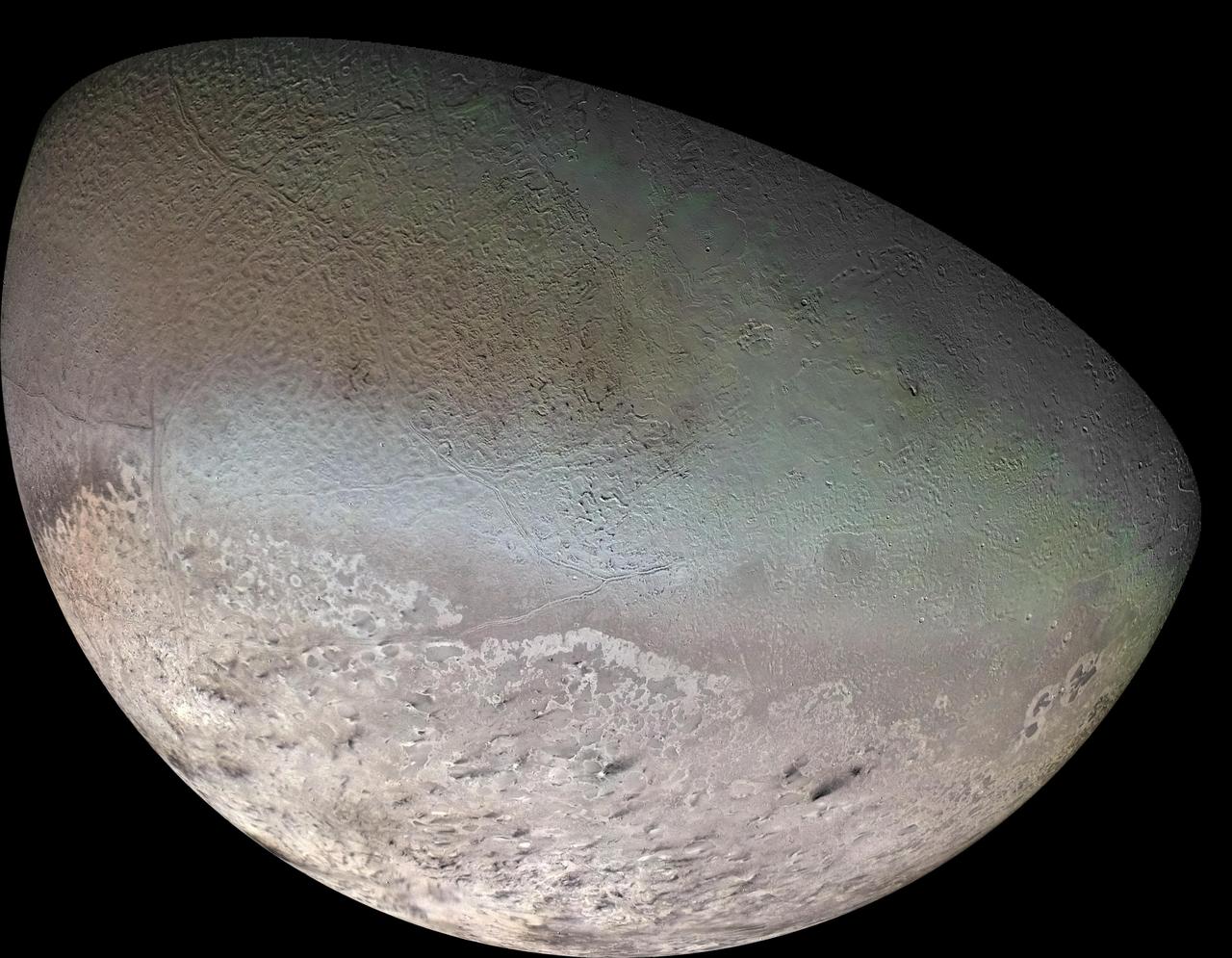
Beyond Neptune's orbit lies a huge ring of icy worlds, leftovers from the birth of the solar system. Pluto is its best-known member, but the first other object was found only in 1992, and thousands are known today. Many short-period comets come from this region or its surroundings. Neptune's moon Triton was probably a Kuiper Belt object that got captured. In 2019 the New Horizons probe flew past Arrokoth, the most distant object ever explored up close.

Related: Pluto, Triton, Comet, Neptune

Constellation

Cygnus

A summer constellation flying along the Milky Way; also called the Northern Cross.

Brightest star
Deneb
Best season (Northern Hemisphere, evenings)
summer (Jul–Sep)
Visibility
Northern Hemisphere
Read more

Cygnus looks like a cross or a bird with outstretched wings: Deneb marks the tail and Albireo the beak. Deneb, a very luminous and distant supergiant, joins Vega and Altair to make the Summer Triangle, an easy asterism to find. Through a small telescope Albireo splits into two stars, one gold and one blue. In Greek myth, the swan was one of Zeus's disguises. Under dark skies, the Milky Way streams right through it.

Related: Lyra, Aquila, Constellation and asterism

Play Hidden constellation →

Technology

Open source

Software whose source code is public and can be studied, modified and shared under its license.

Examples
Linux, Firefox, VLC, Blender
Read more

Source code is the text programmers write that becomes a program. With open-source software, that text is available to everyone under a license that allows using, studying, improving and redistributing it. That lets thousands of people collaborate, catch bugs and adapt programs to their needs. Much of the internet runs on open-source software. Note that open does not always mean free of charge or free of rules; each license sets its own terms.

Related: Algorithm, Web browser, API

Technology

QR code

A square barcode that stores information, such as a link, read with a phone camera.

Created
1994, by the Japanese company Denso Wave
Stands for
Quick Response
Read more

The QR code was invented to track car parts in Japanese factories, and now it is on menus, tickets and payment screens. It stores data in a pattern of black and white squares, and the three large squares in the corners help the camera find it from any angle. Built-in error correction lets it scan even when it is a bit damaged or has a logo on top. Before opening a link from a QR code you find in public, check the address; scammers use them too.

Related: Encryption, Web browser

Astronomy

Comet

An icy body in the solar system that grows a glowing cloud and tail as it nears the Sun.

Read more

Comets are leftovers from the birth of the solar system: blends of ice, dust and rock a few kilometers across. They spend most of their time far out, in the Kuiper Belt or the Oort Cloud. When an orbit brings one close to the Sun, its ice turns to gas and forms a coma, a cloud around the nucleus, plus tails that always point away from the Sun, pushed by sunlight and the solar wind. Some return every few years; others only every few thousand.

Related: Halley's Comet, Asteroid, Meteor shower, Kuiper Belt

Comet

Halley's Comet

The most famous comet: it swings back near the Sun every 75 or 76 years and will return in 2061.

Period
about 75–76 years
Last close pass by the Sun
1986
Next return
2061
Nucleus
about 15 × 8 km
Read more

Halley is a lump of ice, dust and rock. As it nears the Sun, the ice turns to gas and builds a glowing cloud and a tail that can stretch millions of kilometers. Edmond Halley worked out that several recorded comets were the same object and predicted its return, which came true in 1758. In 1986 the European Giotto probe photographed its nucleus. Dust left along its orbit gives us two meteor showers: the Eta Aquariids in May and the Orionids in October.

Related: Comet, Meteor shower, Orion

Play Which planet am I? →

Music

Time signature

How the beats of music are grouped, such as 2, 3 or 4 per group (measure).

Examples
4/4 (much pop and rock), 3/4 (waltz), 6/8
Read more

Music rarely moves in loose beats: it groups them, accenting the first of each group. Each group is a measure, or bar. The time signature, such as 4/4 or 3/4, tells you how many beats are in each bar and which note value gets the beat. 4/4 is so common it is called common time; 3/4 gives a waltz its “one-two-three.” Odd meters such as 5/4 or 7/8 mix groups of 2 and 3 and show up in folk music from many countries.

Related: Tempo and BPM, Polymeter, Polyrhythm, Rhythm

Technology

Image compression

Techniques for shrinking image files, with or without losing quality.

Lossy
JPEG, WebP, AVIF
Lossless
PNG, plus WebP and AVIF in lossless mode
Read more

An uncompressed photo can take up tens of megabytes. Compression shrinks it by exploiting patterns and the limits of human vision. Lossless compression, like PNG's, keeps every pixel exact, which suits screenshots and images with text. Lossy compression, like JPEG's, throws away details we barely notice and produces far smaller files, ideal for photos. Push it too far and you get blocks and smudges. Lighter images make web pages load faster.

Related: Pixel, Vector graphic, Algorithm, Kilobyte (KB)

Astronomy

Conjunction

When two celestial objects appear very close together in the sky.

Read more

A conjunction happens when two objects, such as the Moon and a planet or two planets, line up in our sky. It is only a line-of-sight effect: in space they may be millions of kilometers apart. Pairings of the Moon with Venus or Jupiter are among the prettiest naked-eye sights. When a planet lines up with the Sun, it is said to be in conjunction with the Sun and is lost in the glare.

Related: Opposition, Elongation, Venus

Astronomy

Constellation and asterism

A constellation is an official region of the sky; an asterism is a popular star pattern.

Official constellations
88 (International Astronomical Union)
Famous asterisms
the Big Dipper, the Summer Triangle, Orion's Belt
Read more

Since 1922 the International Astronomical Union has recognized 88 constellations, and since 1930 each has precise borders, like states on a map, so every point in the sky belongs to one. An asterism is any recognizable star pattern, official or not. The Big Dipper is part of Ursa Major; the Summer Triangle links stars from three different constellations. And the stars in a figure are rarely close together in space; they only line up as seen from Earth.

Related: Ursa Major, Cygnus, Orion, Southern Cross

Technology

Cookies

Small pieces of data a website stores in your browser to remember information.

Read more

Cookies let a site remember you: that you are logged in, what is in your cart or which language you prefer. First-party cookies, from the site you are visiting, are usually helpful. Third-party cookies, set by other companies embedded across many pages, have been used to track your activity from site to site for advertising. That is why many privacy laws require sites to tell you and ask permission. You can view, delete or block cookies in your browser settings.

Related: Web browser, Encryption

Constellation

Corona Borealis

A small crown-shaped arc of stars between Boötes and Hercules.

Brightest star
Alphecca (Gemma)
Best season (Northern Hemisphere, evenings)
late spring and summer (May–Aug)
Visibility
Northern Hemisphere; also from the southern tropics
Read more

Corona Borealis is an arc of seven stars that looks like a tiara, with Alphecca as the jewel. In Greek myth, it is Ariadne's crown, tossed into the sky by Dionysus. It hosts T Coronae Borealis, a recurrent nova: a pair of stars in which a white dwarf pulls gas from its companion until it blows up and shines more than a thousand times brighter. Its recorded outbursts came in 1866 and 1946, and astronomers keep watch because they repeat roughly every 80 years.

Related: Boötes, Hercules

Play Hidden constellation →

Constellation

Southern Cross

The smallest of the 88 constellations, emblem of the southern sky and a pointer to the south.

Brightest star
Acrux
Best season (from Mexico, evenings)
spring (Apr–May), low on the southern horizon
Visibility
Southern Hemisphere and the northern tropics
Read more

Crux would fit behind your outstretched palm, but its four main stars are bright. Its long arm points roughly toward the south celestial pole, where there is no bright pole star. It appears on the flags of Australia, New Zealand, Brazil, Papua New Guinea and Samoa. From much of Mexico and other tropical places you can see the whole cross in spring evenings, hugging the southern horizon.

Related: Proxima Centauri, Scorpius, Constellation and asterism

Play Hidden constellation →

Constellation

Delphinus

A small, charming constellation shaped like a leaping dolphin, near Aquila.

Brightest star
Rotanev
Best season (Northern Hemisphere, evenings)
late summer and autumn (Aug–Oct)
Visibility
both hemispheres
Read more

Delphinus is tiny but distinctive: a diamond of four stars, known as Job's Coffin, plus a tail. Two of its stars are named Sualocin and Rotanev; read backwards they spell Nicolaus Venator, the Latin form of Niccolò Cacciatore, an astronomer at Palermo Observatory who named them in the 19th century. In Greek myth, the dolphin helped Poseidon find his bride Amphitrite.

Related: Aquila, Pegasus, Constellation and asterism

Play Hidden constellation →

Technology

Domain and DNS

A domain is a website's name; DNS is the system that translates that name into the server's numeric address.

Example domain
example.com
DNS stands for
Domain Name System
Read more

Computers on the internet find each other by IP addresses, numbers that are hard to remember. Domains, such as a .com or .mx name, are the friendly version. When you type one into your browser, DNS acts like a giant, worldwide phone book: it looks up which IP address goes with that name and connects you. Domains are registered for set periods, usually a year at a time, and must be renewed. The ending, such as .com, .org or .mx, is called the top-level domain.

Related: Web browser, The cloud, Encryption

Astronomy

Lunar eclipse

When Earth comes between the Sun and the Moon, and the Moon moves into our shadow.

Read more

A lunar eclipse happens at full moon and can be seen from the whole night side of Earth. Unlike a solar eclipse, it is completely safe to watch. During totality the Moon does not vanish; it turns coppery red, because Earth's atmosphere bends the red light of every sunrise and sunset on the planet toward it, hence the nickname “blood moon.” Totality can last more than an hour and a half.

Related: Solar eclipse, Moon, Lunar phase

Astronomy

Solar eclipse

When the Moon passes between the Sun and Earth, blocking sunlight fully or partly.

Longest possible totality
about 7.5 minutes
Read more

A solar eclipse can only happen at new moon, when the Moon lines up with the Sun. It relies on a lucky coincidence: the Sun is about 400 times wider than the Moon but also about 400 times farther away, so both look nearly the same size. If the Moon covers it completely, the eclipse is total and the corona appears; if a ring of light remains, it is annular. Never look at it without certified eclipse glasses, except during the brief moment of totality.

Related: Lunar eclipse, Sun, Moon, Ecliptic

Astronomy

Ecliptic

The path the Sun appears to follow among the stars over a year.

Tilt to the celestial equator
about 23.4°
Read more

As Earth orbits the Sun, we see the Sun creep against the background stars. That yearly track is the ecliptic. Since the planets orbit in nearly the same plane, the Moon and planets also stay close to it. The constellations it crosses form the zodiac; there are really thirteen, because it also passes through Ophiuchus. Eclipses happen only when the Moon crosses the ecliptic, which is where the name comes from.

Related: Solar eclipse, Solstice, Zodiac, Leo

Astronomy

Elongation

The angle between a planet and the Sun in our sky.

Mercury's maximum
about 28°
Venus's maximum
about 47°
Read more

Elongation is the angle separating an object from the Sun as seen from Earth. It matters most for Mercury and Venus: because they orbit inside Earth's orbit, they never stray far from the Sun. At greatest elongation they appear farthest from it, which is the best time to catch them, in the evening sky when east of the Sun or before dawn when west of it.

Related: Mercury, Venus, Conjunction

Astronomy

Yellow dwarf

A star like the Sun: medium-sized, in the stable stage of its life, with a surface around 5,500 °C.

Classification
spectral type G, main sequence
Examples
the Sun, Alpha Centauri A
Typical stable lifetime
about 10 billion years
Read more

“Yellow dwarf” is the everyday name for G-type stars that, like the Sun, are in the longest and calmest stage of life, fusing hydrogen in their cores. “Dwarf” does not mean tiny; it just sets them apart from giants. And despite the name, their light is nearly white; the Sun looks yellowish from the ground because our atmosphere scatters some of its blue light. Such stars spend about 10 billion years in this phase, and the Sun is roughly halfway through.

Related: Sun, White dwarf, Kelvin, Habitable zone

Astronomy

White dwarf

The hot, ultra-dense core left behind when a star like the Sun runs out of fuel.

Typical size
similar to Earth
Maximum mass
about 1.4 times the Sun's
Example
Sirius B
Read more

When a Sun-like star reaches the end of its life, it swells into a red giant, sheds its outer layers and exposes its core: a white dwarf. It packs roughly the Sun's mass into a ball about the size of Earth, so it is incredibly dense; a teaspoon of its material would weigh several tonnes. It no longer runs on fusion and glows only from leftover heat, cooling very slowly over billions of years. The Sun will end up this way in the very distant future.

Related: Sirius, Sun, Nebula, Yellow dwarf

Moon

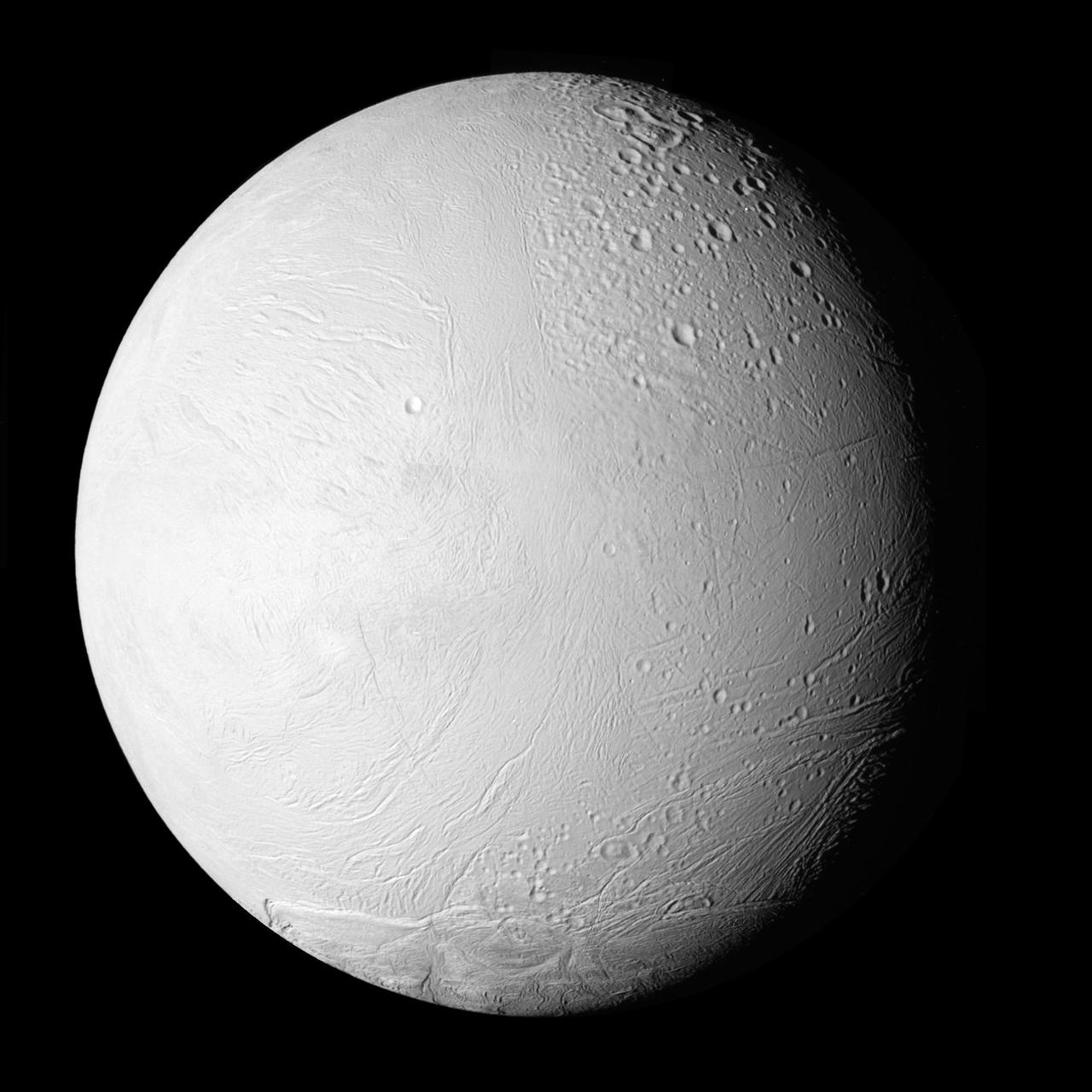
Enceladus

A small, white moon of Saturn that shoots jets of water into space from its south pole.

Diameter
about 504 km
Planet
Saturn
Exploration
Cassini spacecraft (2004–2017)

Image: NASA/JPL/Space Science Institute

Read more

Enceladus reflects almost all the sunlight that hits it, making it one of the brightest objects in the solar system. Near its south pole, cracks vent geysers of water vapor and ice grains that feed Saturn's E ring. Cassini flew straight through those plumes and detected salts and organic molecules, evidence of an ocean under the ice. That makes it a key target in the search for habitable environments.

Related: Saturn, Titan, Europa

Play Which planet am I? →

Astronomy

Equinox

The two moments of the year when the Sun crosses the celestial equator and day and night are nearly equal.

Dates
around March 20 and September 22–23
Read more

At an equinox the Sun sits right over Earth's equator: everywhere it rises almost due east and sets almost due west. Equinoxes mark the start of astronomical spring and autumn. The name means “equal night,” though in practice daytime lasts a few minutes longer, because the atmosphere bends sunlight and the Sun is a disk, not a point. At Chichén Itzá in Mexico, the equinox is famous for the serpent-shaped shadow on El Castillo.

Related: Solstice, Ecliptic, Sun

Music

Scale

A set of notes arranged from low to high that serves as the basis for melodies and harmony.

Read more

A scale is like a song's color palette: the set of notes it leans on most, lined up from lowest to highest. What makes one scale different from another is the spacing between its notes, measured in whole steps and half steps. Change the pattern and the mood changes: the major scale tends to sound bright, the minor scale more wistful, the pentatonic open and easy to improvise with. Many musical traditions around the world have their own scales.

Related: Major scale, Pentatonic scale, Key, Interval

Play Note of the day →

Music

Major scale

The most widely used seven-note scale in Western music, with a bright, settled sound.

Pattern
whole, whole, half, whole, whole, whole, half
Example
C major: C–D–E–F–G–A–B–C
Read more

The major scale always follows the same pattern of steps: whole, whole, half, whole, whole, whole, half. C major is the easiest to see because on a piano it uses only the white keys. Start on any other note, keep the pattern, and you get another major scale, though you will need some black keys. It is the scale behind “Do-Re-Mi” and countless nursery songs, hymns and pop tunes.

Related: Scale, Pentatonic scale, Key, Interval

Play Note of the day →

Music

Pentatonic scale

A five-note scale found in music all over the world and very easy to improvise with.

C major pentatonic
C–D–E–G–A
A minor pentatonic
A–C–D–E–G
Read more

“Penta” means five: this scale uses five notes per octave. The major pentatonic is a major scale minus its fourth and seventh degrees, the very notes that create the most tension, so almost any combination sounds good. It shows up in traditional music from Asia, Africa, the Americas and Europe, and it underpins a lot of blues, rock and folk. Fun fact: the five black keys of a piano form a pentatonic scale.

Related: Scale, Major scale, Interval

Play Note of the day →

Zodiac constellation

Scorpius

A zodiac constellation shaped like a scorpion, with a red heart: the star Antares.

Brightest star
Antares
Best season (Northern Hemisphere, evenings)
summer (Jun–Aug)
Visibility
best from the south; from mid-northern latitudes it stays low in the south
Read more

Scorpius is one of the few constellations that actually looks like its namesake: a curving line of stars forms the body and tail, ending in a stinger. At its heart shines Antares, a red supergiant hundreds of times wider than the Sun; the name means “rival of Ares (Mars)” because of its color. It lies on the Milky Way, near the direction of our galaxy's center. In Greek myth, the scorpion was sent after Orion, which is why the two are never in the sky together.

Related: Sagittarius, Orion, Ecliptic, Zodiac

Play Hidden constellation →

Star

Polaris

The North Star: it barely moves while the rest of the sky turns around it.

Also called
North Star
Constellation
Ursa Minor
Distance
about 430 light-years
Apparent magnitude
about 2.0
Read more

Polaris sits almost exactly in line with Earth's rotation axis, so from the Northern Hemisphere it seems to stay put while other stars wheel around it. Its height above the horizon roughly equals your latitude. It is not especially bright, but it is easy to find by following the two stars at the end of the Big Dipper's bowl. It is actually a system of several stars. Because Earth's axis slowly wobbles, in about 12,000 years Vega will take over as the pole star.

Related: Ursa Minor, Ursa Major, Lyra

Play Which planet am I? →

Moon

Europa

An icy moon of Jupiter hiding a salty ocean beneath its crust.

Diameter
about 3,122 km
Planet
Jupiter
Mission
Europa Clipper (launched 2024)

Image: NASA/JPL-Caltech/SETI Institute

Read more

Europa wears a shell of ice scored by long, reddish cracks. Beneath it there is very likely a global ocean of salty water, possibly holding more water than all of Earth's oceans combined. Liquid water, chemistry and an energy source are the ingredients we link with life, which makes Europa one of the most promising places to look. NASA's Europa Clipper launched in 2024 and is on its way to study it.

Related: Jupiter, Io, Ganymede, Enceladus

Play Which planet am I? →

Astronomy

Exoplanet

A planet orbiting a star other than the Sun.

Confirmed exoplanets
more than 6,000
First around a Sun-like star
51 Pegasi b, 1995
Read more

Until the 1990s, nobody knew whether other stars had planets. In 1995 astronomers announced 51 Pegasi b, in the constellation Pegasus, and thousands have been confirmed since. They are rarely seen directly: most are detected because the star dims slightly as the planet crosses in front, or because the planet's gravity makes the star wobble. They come in every flavor, from gas giants hugging their stars to rocky worlds, some in the habitable zone where liquid water could exist, such as Proxima b.

Related: Proxima Centauri, Pegasus, Galaxy, Habitable zone

Astronomy

Lunar phase

The lit shape of the Moon we see, which changes over a cycle of about 29.5 days.

Main phases
new, first quarter, full, last quarter
Full cycle
about 29.5 days
Read more

Half the Moon is always lit by the Sun, but depending on where it is in its orbit we see more or less of that half. At new moon it sits between us and the Sun and is invisible. Then it waxes through first quarter to full moon, when it is opposite the Sun, and wanes to last quarter. Phases are not caused by Earth's shadow; that only happens in a lunar eclipse. Tip: a waxing moon shows up in the afternoon and evening sky.

Related: Moon, Lunar eclipse, Supermoon

Moon

Phobos

The larger moon of Mars: small, lumpy and slowly spiraling inward.

Size
about 27 × 22 × 18 km
Planet
Mars
Orbit around Mars
about 7 h 39 min

Image: NASA/JPL-Caltech/University of Arizona

Read more

Phobos looks like a cratered potato; its biggest crater, Stickney, takes up a large part of one side. It orbits so close to Mars, about 6,000 km above the surface, that it goes around the planet roughly three times a day. Tidal forces are slowly dragging it inward, and within tens of millions of years it should break apart, possibly forming a ring. Its name is Greek for “fear”; its smaller sibling, Deimos, means “dread”.

Related: Mars, Asteroid

Play Which planet am I? →

Music

Frequency

How many times something repeats per second; in sound, it sets how high or low we hear it.

Unit
hertz (Hz)
Speed of sound in air
about 343 m/s at 20 °C
Read more

Sound is a vibration traveling through the air, and frequency is how many times it vibrates per second: more vibrations make a higher pitch, fewer a lower one. Double the frequency and the note rises an octave. Frequency is tied to wavelength: since sound moves at about 343 meters per second, a 440 Hz A has waves roughly 78 cm long, while a 40 Hz bass note stretches beyond 8 meters. Equalizers boost or cut frequency ranges to reshape a sound.

Related: Hertz (Hz), Octave, Harmonics, A440 tuning

Astronomy

Galaxy

A vast system of stars, gas, dust and dark matter held together by gravity.

Our galaxy
the Milky Way
Nearest large galaxy
Andromeda, about 2.5 million light-years away
Read more

Our Sun is one of hundreds of billions of stars in the Milky Way, a spiral galaxy about 100,000 light-years across. The milky band crossing a dark sky is our own galaxy seen from the inside. The observable universe holds an enormous number of galaxies: spirals, ellipticals and irregulars. From the Northern Hemisphere you can see the Andromeda Galaxy with the naked eye; from the south, the Magellanic Clouds.

Related: Milky Way, Andromeda, Quasar, Light-year

Moon

Ganymede

The largest moon in the solar system, bigger even than the planet Mercury.

Diameter
about 5,268 km
Planet
Jupiter
Mission
JUICE (launched 2023)

Image: NASA/JPL

Read more

Ganymede, a mix of ice and rock, is wider than Mercury, though less massive. It is the only moon known to generate its own magnetic field, and there is evidence of a salty ocean buried beneath its surface. Its face combines dark, ancient terrain with brighter, younger grooved bands. The European Space Agency's JUICE mission, launched in 2023, is on its way to study Jupiter's moons and will end up orbiting Ganymede.

Related: Jupiter, Callisto, Europa, Titan

Play Which planet am I? →

Zodiac constellation

Gemini

The zodiac twins, headed by the stars Castor and Pollux.

Brightest star
Pollux
Best season (Northern Hemisphere, evenings)
winter (Jan–Mar)
Visibility
both hemispheres
Read more

Gemini is easy to spot thanks to two bright stars close together: Castor and Pollux, the twins' heads, with two lines of stars below them forming their bodies. Pollux, the brighter, is an orange giant with at least one known planet. Castor looks like a single star but is a system of six. In December, the Geminid meteor shower, one of the strongest of the year, appears to radiate from here. In Greek myth the twins were inseparable brothers.

Related: Taurus, Auriga, Meteor shower, Orion

Play Hidden constellation →

Technology

Vector graphic

An image described with mathematical shapes, so it can be scaled up without losing sharpness.

Common web format
SVG
Typical uses
logos, icons, fonts
Read more

Instead of storing millions of pixels, a vector graphic stores instructions: “a circle here, this size and this color,” “a curve from this point to that one.” That is why it can be enlarged to billboard size without getting blocky, and its files are often small. It is ideal for logos, icons, flat illustrations and lettering; the fonts on your computer are vectors. It is less suited to photos, which have too much detail and shading to describe with shapes.

Related: Pixel, Image compression, XML

Music

Hertz (Hz)

The unit of frequency: one hertz is one repetition, or cycle, per second.

Tuning A
440 Hz
Human hearing
about 20 Hz to 20,000 Hz
Mains power in North America
60 Hz
Read more

The hertz counts how many times something repeats each second. In music it tells you how high a note is: the tuning A vibrates 440 times a second, 440 Hz. Young human ears hear roughly 20 to 20,000 Hz, and the upper limit drops with age. It is used outside music too: household current in North America cycles at 60 Hz, screens refresh at 60 or 120 Hz, and Wi-Fi uses waves of billions of hertz (gigahertz). It is named after the physicist Heinrich Hertz.

Related: Frequency, A440 tuning, Octave, Wi-Fi

Constellation

Hercules

A large summer constellation shaped like a kneeling hero, with a quadrilateral called the Keystone.

Brightest star
Kornephoros
Best season (Northern Hemisphere, evenings)
summer (Jun–Aug)
Visibility
Northern Hemisphere; also from the southern tropics
Read more

Hercules is big but made of modest stars. The easiest part to spot is the Keystone, a lopsided square between Vega and Arcturus. Along one side lies M13, a globular cluster of hundreds of thousands of stars about 22,000 light-years away; binoculars show it as a fuzzy ball. In myth, he is the Greek hero Heracles (Hercules to the Romans), famous for his twelve labors; in the sky he hangs upside down.

Related: Lyra, Boötes, Corona Borealis, Leo

Play Hidden constellation →

Technology

HTML

The markup language used to write the structure of every web page.

Stands for
HyperText Markup Language
Creator
Tim Berners-Lee, early 1990s
Read more

HTML tells the browser what each part of a page is: this is a heading, this a paragraph, this an image, this a link. It does so with tags like <h1>, <p>, <img> and <a>. It is not a programming language, since it does not calculate or make decisions; it describes content. Links, the “hypertext” in its name, are the core idea of the web, tying pages to one another. Today it is maintained as a living standard that keeps being updated.

Related: JavaScript, Web browser, XML, Domain and DNS

Technology

Artificial intelligence

The field that aims to have computers do tasks we associate with human intelligence.

Term coined
1956, Dartmouth conference (USA)
Read more

Artificial intelligence (AI) covers techniques that let machines recognize images, understand speech, translate, play games or make decisions. Much of today's AI relies on machine learning: instead of programming every rule, a system is trained on huge numbers of examples until it finds patterns. It powers keyboard autocorrect, spam filters and voice assistants. It is useful but can make mistakes or reflect biases in its data, so double-check anything important.

Related: Language model, Algorithm

Music

Interval

The distance in pitch between two notes.

Examples
C–E: major third; C–G: perfect fifth; C–C: octave
Smallest step (piano)
semitone (half step)
Read more

An interval measures how far music moves from one note to the next. It is named by counting letter names: C to E is a third (C, D, E); C to G is a fifth. On a piano the smallest step is a semitone, from one key to the very next, and twelve semitones make an octave. Intervals carry character: a fifth sounds solid and open, a major third cheerful, a minor third darker. Learning to hear them is a big help for playing songs by ear.

Related: Octave, Chord, Scale, Note

Play Note of the day →

Moon

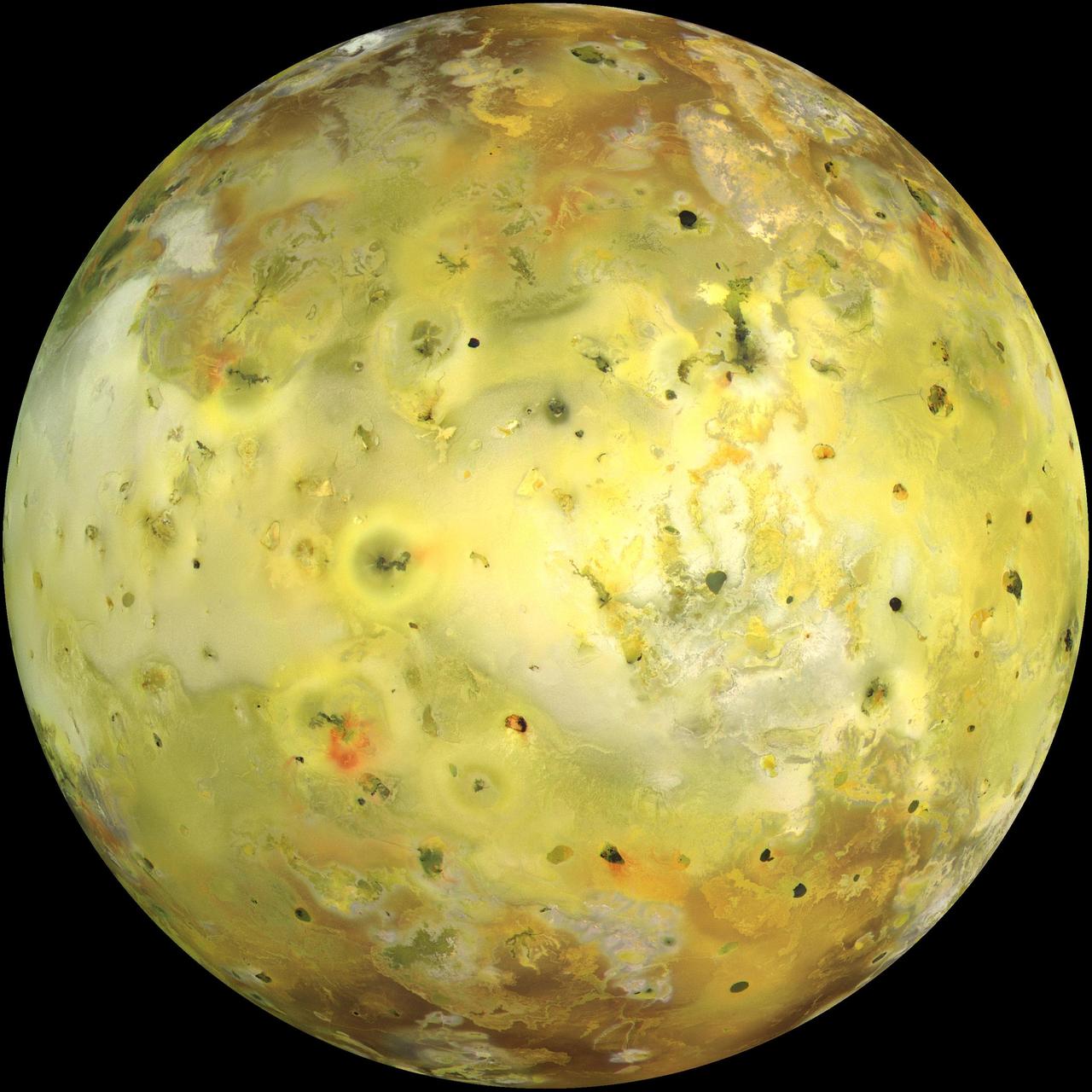
Io

A moon of Jupiter and the most volcanically active place in the solar system.

Diameter
about 3,643 km
Planet
Jupiter
Discovery
1610, by Galileo

Image: NASA/JPL/University of Arizona

Read more

Io is the Galilean moon closest to Jupiter. The giant planet's gravity, plus regular tugs from Europa and Ganymede, keeps squeezing and stretching it; that flexing heats its interior and powers hundreds of active volcanoes, some throwing material hundreds of kilometers high. Sulfur paints the surface yellow, orange and red, so from space it looks a bit like a pizza.

Related: Jupiter, Europa, Ganymede

Play Which planet am I? →

Technology

JavaScript

The programming language that makes web pages interactive and runs inside the browser.

Created
1995, by Brendan Eich at Netscape
Standard name
ECMAScript
Read more

If HTML is a page's structure and CSS its look, JavaScript is what makes it respond: menus that open, games, maps you can drag, forms that warn you about a missing field. It was created in 1995 for the Netscape browser, and every browser runs it today. Despite the name, it has no direct relation to the Java language. With tools like Node.js it also runs on servers, making it one of the most widely used languages in the world.

Related: HTML, Web browser, PWA (progressive web app), API

Planet

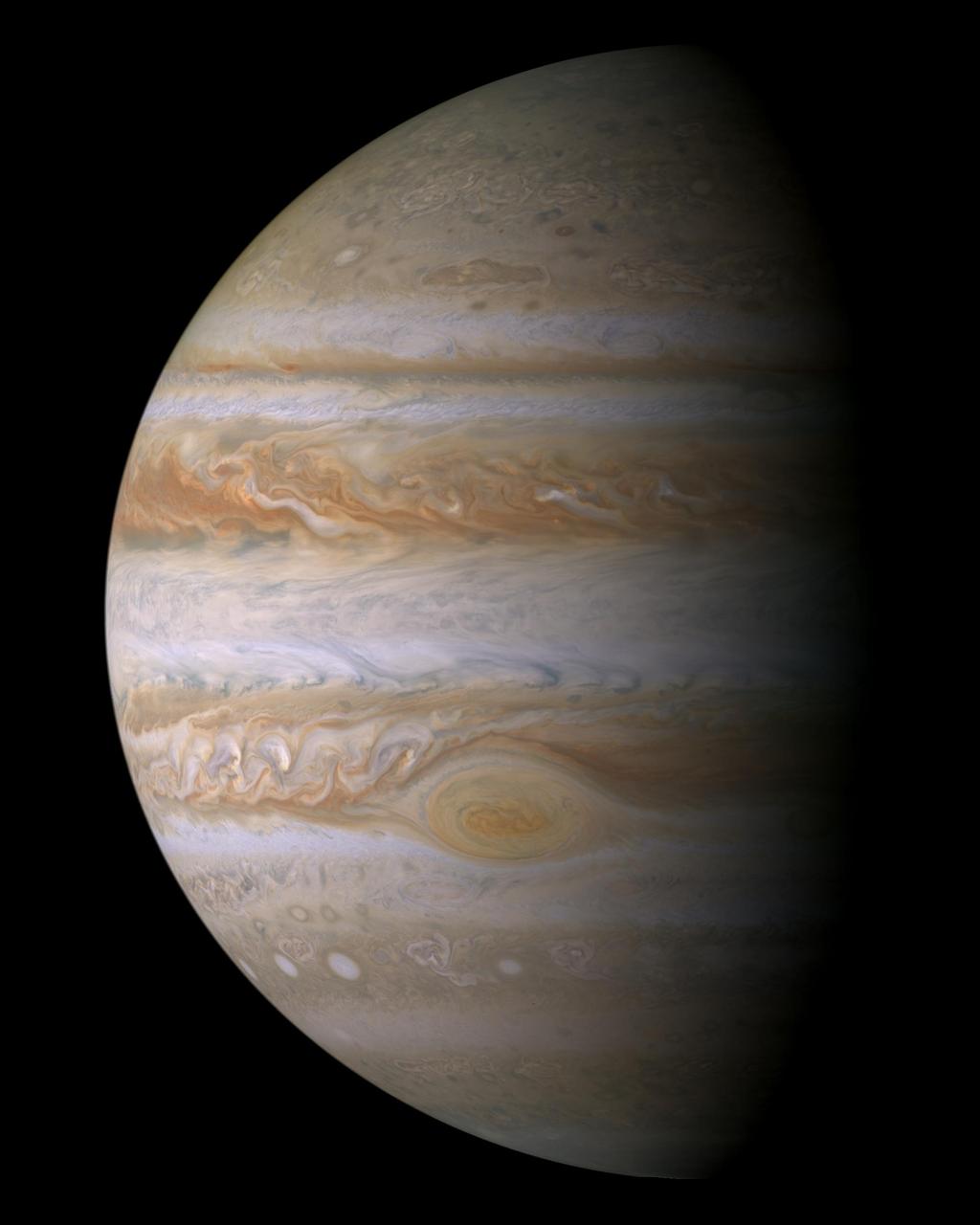
Jupiter

The largest planet in the solar system: a gas giant with a storm bigger than Earth.

Equatorial diameter
about 142,984 km
Mean distance from the Sun
about 778 million km
Length of day
about 10 hours
Known moons
more than 100

Image: NASA/JPL/Space Science Institute

Read more

Jupiter is mostly hydrogen and helium, and it is big enough to hold more than 1,300 Earths. Even so, it spins faster than any other planet, with a day of about 10 hours. Its cloud bands and the Great Red Spot, a storm watched for centuries, show up in a small telescope. Steady binoculars reveal its four big moons, the Galilean moons Galileo found in 1610: Io, Europa, Ganymede and Callisto.

Related: Io, Europa, Ganymede, Callisto

Play Which planet am I? →

Astronomy

Kelvin

The temperature scale that starts at absolute zero, the lowest temperature possible.

Absolute zero
0 K = −273.15 °C
Conversion
K = °C + 273.15
Sun's surface
about 5,800 K
Read more

The Kelvin scale measures temperature from absolute zero, the point where the particles in matter have the least possible energy and nothing can get any colder. One kelvin is the same size as one degree Celsius, so you just add 273.15 to convert. It is written without a degree sign: 300 K, not 300 °K. Astronomers use it for stars, planets and space itself. It is named after William Thomson, Lord Kelvin, a 19th-century physicist.

Related: Sun, Yellow dwarf, White dwarf

Technology

Kilobyte (KB)

A unit of digital information equal to 1,000 bytes; one byte is 8 bits.

1 KB
1,000 bytes
1 KiB (kibibyte)
1,024 bytes
1 byte
8 bits
Read more

A bit is the smallest unit of information, a 0 or a 1. Eight bits make a byte, enough to store one character of plain text. A kilobyte is a thousand bytes, roughly half a page of plain text. For years “kilobyte” was also used to mean 1,024 bytes, since computers like powers of 2; the kibibyte (KiB) exists to clear up that confusion. It is also why a drive can show a bit less capacity on your computer than the box promises.

Related: RAM, Image compression, Pixel

Technology

The cloud

Services and storage that run on remote computers you reach over the internet.

Read more

When you save photos “to the cloud,” they actually go to servers: powerful computers in a company's large data centers. The upside is that you can reach your files from any device, share them easily and keep them safe if your phone breaks. Beyond storage, the cloud runs email, music streaming, games and full applications. The downside is that you depend on your connection and on the company holding your data, so strong passwords matter.

Related: API, Encryption, PWA (progressive web app)

Zodiac constellation

Leo

The zodiac lion, whose mane forms a “sickle” of stars like a backwards question mark.

Brightest star
Regulus
Best season (Northern Hemisphere, evenings)
spring (Mar–May)
Visibility
both hemispheres
Read more

Leo is one of the zodiac constellations that truly resembles its figure: a lion lying down. The head and mane form the Sickle, an asterism shaped like a backwards question mark, with Regulus at the bottom. The tail ends at Denebola. Because Leo lies on the ecliptic, the Moon and planets often pass through it. The Leonid meteor shower in November seems to come from here. In Greek myth, it is the Nemean lion defeated by Hercules.

Related: Meteor shower, Ecliptic, Hercules, Zodiac

Play Hidden constellation →

Constellation

Lyra

A small summer constellation ruled by Vega, one of the brightest stars in the sky.

Brightest star
Vega
Best season (Northern Hemisphere, evenings)
summer (Jun–Sep)
Visibility
Northern Hemisphere
Read more

Lyra is small but easy to find thanks to Vega, a bluish-white star and the fifth-brightest in the night sky. Beside it, a little parallelogram of faint stars forms the body of the harp. Vega is one corner of the Summer Triangle and, because Earth's axis slowly wobbles, it will become the pole star in about 12,000 years. In Greek myth, it is the lyre of Orpheus, whose music could move even stones.

Related: Cygnus, Aquila, Polaris, Hercules

Play Hidden constellation →

Astronomy

Meteor shower

A night with many “shooting stars,” when Earth passes through dust left by a comet or asteroid.

Examples
Perseids (August), Orionids (October), Leonids (November), Geminids (December)
Read more

Shooting stars are not stars. They are specks of dust, usually smaller than a grain of sand, that hit the atmosphere at high speed and heat up until they glow. When Earth plows through a trail of dust shed by a comet, many arrive at once: a meteor shower. No telescope needed. Find a dark spot, lie back, give your eyes about 20 minutes to adjust and watch a wide patch of sky, usually after midnight.

Related: Radiant, Fireball, Halley's Comet, Comet

Moon

Moon

Earth's only natural satellite, which always shows us the same face.

Diameter
about 3,475 km
Mean distance from Earth
about 384,400 km
Cycle of phases
about 29.5 days

Image: NASA/Goddard Space Flight Center Scientific Visualization Studio

Read more

The Moon turns once on its axis in the same time it takes to circle Earth, so the same side always faces us. It has no light of its own; it reflects sunlight, and how much of its lit half we see gives us the phases. Its gravity drives most of our tides. Between 1969 and 1972, twelve astronauts walked on its surface. It is also slowly drifting away, about 4 cm a year.

Related: Earth, Lunar phase, Lunar eclipse, Supermoon

Play Which planet am I? →

Astronomy

Apparent magnitude

The scale for how bright an object looks from Earth; the lower the number, the brighter.

Sirius
−1.46
Full Moon
about −12.7
Naked-eye limit (dark sky)
about 6
Read more

The magnitude scale goes back to ancient Greece, when the brightest stars were called first magnitude and the faintest sixth. Today it is defined precisely: a difference of 5 magnitudes means 100 times the brightness, so very bright objects get negative numbers. Note that apparent magnitude describes how bright something looks, not how much light it truly gives off; a modest nearby star can outshine a distant giant.

Related: Sirius, Venus, Light-year

Planet

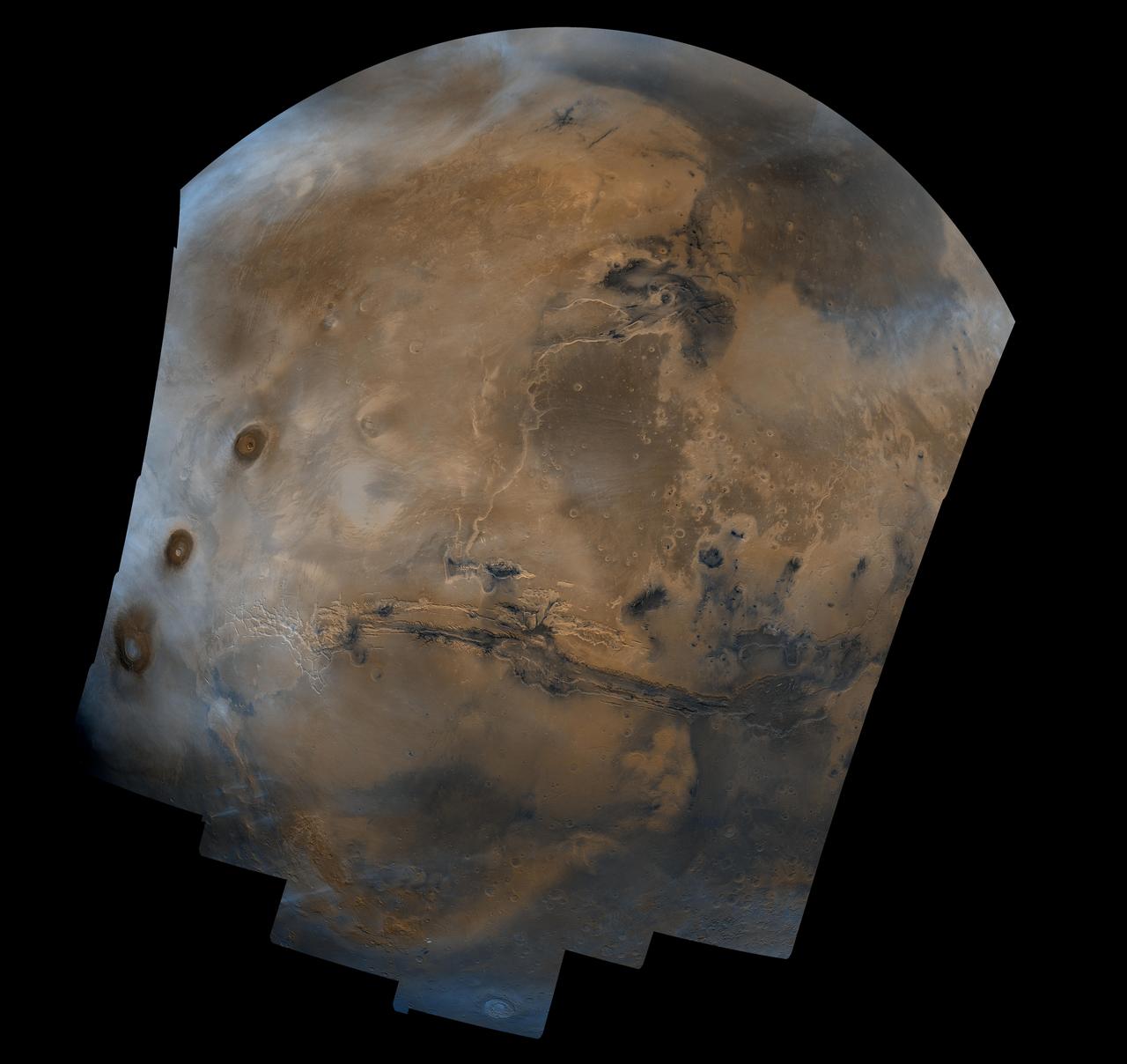
Mars

The red planet: a cold desert world with the tallest volcano in the solar system.

Diameter
about 6,779 km
Mean distance from the Sun
about 228 million km
Length of day
about 24 h 37 min
Moons
2 (Phobos and Deimos)

Image: NASA/JPL/USGS

Read more

Mars gets its color from iron oxide in its dust, which is essentially rust. Its day is almost the same length as ours, it has icy polar caps, and it hosts Olympus Mons, the tallest known volcano. Today it is cold and dry, but ancient riverbeds and minerals show that liquid water once flowed there. Several rovers are exploring it. Roughly every 26 months, Earth and Mars line up on the same side of the Sun; that opposition is the best time to observe it.

Related: Phobos, Earth, Opposition

Play Which planet am I? →

Planet

Mercury

The smallest planet and the closest to the Sun: a rocky, heavily cratered world with almost no atmosphere.

Diameter
about 4,879 km
Mean distance from the Sun
about 58 million km
Length of year
88 Earth days

Image: NASA/Johns Hopkins University Applied Physics Laboratory/Carnegie Institution of Washington

Read more

Mercury races around the Sun in just 88 days, yet it turns so slowly that one sunrise to the next takes about 176 Earth days. With almost no air to hold heat, its surface swings from roughly 430 °C in daylight to about −180 °C at night. Its cratered face looks a lot like the Moon's. From Earth it is a tricky catch: it never strays far from the Sun, so you only see it low in twilight, just after sunset or before dawn.

Related: Venus, Sun, Elongation

Play Which planet am I? →

Music

MIDI

A standard language that electronic instruments and computers use to exchange musical information.

Introduced
1983
Note values
0 to 127 (middle C = 60)
Channels
16 per port
Read more

MIDI (Musical Instrument Digital Interface) does not carry sound but instructions: which note was played, how hard, when it was released, which knob was turned. Think of it as a digital score that another device performs with its own sound. Thanks to MIDI, a keyboard can control a synthesizer or music software, and a MIDI file can be played back with any instrument. It was introduced in 1983 and is still everywhere; MIDI 2.0, compatible with the original, was published in 2020.

Related: Note, Tempo and BPM, Timbre, API

Technology

Language model

An AI system trained on vast amounts of text to understand and generate language.

Read more

A language model learns, from enormous amounts of text, which words tend to follow others in each context. With enough training it can draft, summarize, translate, answer questions or help write code. Today's chat assistants run on large language models. They do not look up the truth in a database; they generate likely text, so they can sometimes state wrong things confidently. It is wise to check important facts against reliable sources.

Related: Artificial intelligence, Algorithm, API

Astronomy

Nadir

The point opposite the zenith: directly beneath your feet, on the far side of Earth.

Read more

The nadir is the direction pointing straight down, through the planet, to the sky on the other side. We cannot see it, but it is useful for describing positions: zenith and nadir form each observer's vertical axis. In everyday English, reaching a nadir means hitting rock bottom. Earth-observing satellites are said to look at nadir when they point straight down.

Related: Zenith

Astronomy

Nebula

A vast cloud of gas and dust in space, where stars are born or where dead stars leave their remains.

Read more

The word is Latin for “cloud.” Some nebulae are stellar nurseries, like the Orion Nebula, about 1,300 light-years away and visible to the naked eye as a fuzzy patch in the hunter's sword. Others are the remains of stars: planetary nebulae form when a Sun-like star sheds its outer layers, and supernova remnants such as the Crab Nebula in Taurus are left after an explosion. Their colors come from glowing gases.

Related: Orion, Taurus, Galaxy

Planet

Neptune

The farthest planet from the Sun: a deep blue ice giant with record-breaking winds.

Equatorial diameter
about 49,528 km
Mean distance from the Sun
about 4.5 billion km
Length of year
about 165 Earth years
Discovery
1846

Image: NASA/JPL

Read more

Neptune was found in 1846 with a pencil before a telescope: odd tugs on Uranus's orbit let mathematicians predict where an unseen planet should be, and there it was. It has the fastest winds in the solar system, topping 2,000 km/h. One orbit takes about 165 years, so since its discovery it has gone around the Sun only once, completing the lap in 2011. Its largest moon, Triton, orbits backwards. You need binoculars or a telescope to see it.

Related: Triton, Uranus, Pluto

Play Which planet am I? →

Music

Note

A sound with a definite pitch, and also the name or symbol we use to write it down.

Names in English
C, D, E, F, G, A, B
Solfège names
Do, Re, Mi, Fa, Sol, La, Si (Ti)
Read more

A musical note is a sound with a steady frequency that we hear as higher or lower. Western music uses seven basic letter names (C, D, E, F, G, A, B) and, counting sharps and flats, twelve distinct notes before the cycle repeats an octave higher. Many Spanish-speaking countries use solfège names instead, so C is Do and A is La. On a staff, each note shows two things: how high it is, by its position on the lines, and how long it lasts, by its shape.

Related: Scale, Octave, A440 tuning, Interval

Play Note of the day →

Music

Octave

The interval between a note and the next one with the same name, at double or half the frequency.

Frequency ratio
2 to 1
Example
A at 220 Hz, 440 Hz, 880 Hz
Read more

When one note vibrates at twice the frequency of another, they sound so alike that they share a name: they are an octave apart. The word comes from the fact that in a major scale the eighth note repeats the first (C, D, E, F, G, A, B, C). When a man and a woman sing “the same” tune, they are often an octave apart. An 88-key piano spans a little over seven octaves.

Related: Interval, A440 tuning, Harmonics, Note

Play Note of the day →

Astronomy

Opposition

When a planet sits opposite the Sun as seen from Earth: the best time to observe it.

Read more

At opposition, Earth passes between the Sun and an outer planet such as Mars, Jupiter or Saturn. The planet rises at sunset, stays up all night and is closer to us than usual, so it looks bigger and brighter. Jupiter reaches opposition about every 13 months; Mars roughly every 26 months. Mercury and Venus can never be at opposition, because they orbit closer to the Sun than we do.

Related: Mars, Jupiter, Conjunction

Constellation

Orion

The hunter of the winter sky, with its belt of three stars in a row.

Brightest star
Rigel (variable Betelgeuse sometimes rivals it)
Best season (Northern Hemisphere, evenings)
winter (Dec–Feb)
Visibility
both hemispheres; it straddles the celestial equator
Read more

Orion is one of the easiest constellations to spot. Three stars in a row make up his belt; above it glows reddish Betelgeuse and below it bluish-white Rigel. Hanging from the belt is the “sword,” where the Orion Nebula, a stellar nursery, shows up to the naked eye. In Greek myth, Orion was a mighty hunter. His belt is a handy pointer: follow it one way to reach Sirius, and the other way to Aldebaran in Taurus.

Related: Betelgeuse, Canis Major, Taurus, Nebula

Play Hidden constellation →

Constellation

Ursa Major

A large northern constellation whose seven brightest stars form the famous Big Dipper.

Brightest star
Alioth
Best season (Northern Hemisphere, evenings)
spring (Mar–May)
Visibility
Northern Hemisphere; from Mexico it sits low in the north
Read more

The best-known part of the Great Bear is not the bear at all but seven stars forming a ladle with a handle, the Big Dipper, an asterism. The two stars at the end of the bowl, Dubhe and Merak, point to Polaris, and the arc of the handle leads to Arcturus in Boötes. In Greek myth, the bear was the nymph Callisto, transformed and placed among the stars. From latitudes like Canada or northern Europe it never sets.

Related: Ursa Minor, Polaris, Boötes, Constellation and asterism

Play Hidden constellation →

Constellation

Ursa Minor

The constellation at the north celestial pole; Polaris sits at the tip of its tail.

Brightest star
Polaris (the North Star)
Best season (Northern Hemisphere, evenings)
all year; best in summer
Visibility
Northern Hemisphere only
Read more

The Little Bear looks like a smaller, fainter copy of the Big Dipper. Apart from Polaris and Kochab at the other end, its stars are hard to see under light pollution. Because it holds the North Star, the whole northern sky seems to pivot around it through the night. Kochab and its neighbor Pherkad are nicknamed the “guardians of the pole.” It cannot be seen from the Southern Hemisphere.

Related: Polaris, Ursa Major, Cassiopeia

Play Hidden constellation →

Constellation

Pegasus

The winged horse of autumn, famous for its Great Square.

Brightest star
Enif (variable Scheat sometimes matches it)
Best season (Northern Hemisphere, evenings)
autumn (Sep–Nov)
Visibility
both hemispheres
Read more

Pegasus is known for the Great Square, four stars forming a huge rectangle; one corner, Alpheratz, actually belongs to Andromeda. Enif marks the horse's nose. Pegasus is home to 51 Pegasi, the first Sun-like star found to have a planet, in 1995. In Greek myth, Pegasus sprang from the blood of Medusa when Perseus defeated her.

Related: Andromeda, Perseus, Exoplanet, Constellation and asterism

Play Hidden constellation →

Constellation

Perseus

The hero of Greek myth; every August, the Perseid meteors seem to come from this part of the sky.

Brightest star
Mirfak
Best season (Northern Hemisphere, evenings)
autumn and winter (Nov–Jan)
Visibility
Northern Hemisphere
Read more

Perseus is the hero who, in Greek myth, slew Medusa and rescued Andromeda. In the constellation, Algol stands for Medusa's head: it is a double star that “winks,” because every three days or so one star passes in front of the other and dims it for a few hours. Around Mirfak lies a lovely group of stars in binoculars. Every August, the Perseid meteor shower appears to radiate from here.

Related: Andromeda, Cassiopeia, Meteor shower, Radiant

Play Hidden constellation →

Technology

Pixel

The smallest dot of a digital image or screen, holding a single color.

Name origin
short for picture element
Example
Full HD = 1920 × 1080 pixels
Read more

Digital photos and screens are mosaics of tiny colored squares called pixels; zoom far into a photo and you start to see them. The more pixels an image has, the more detail it can show: a Full HD screen has 1920 by 1080, about 2.1 million. On displays, each pixel is usually made of red, green and blue subpixels that blend into millions of colors. Images made of pixels are called bitmap or raster images.

Related: Vector graphic, Image compression

Dwarf planet

Pluto

An icy dwarf planet in the Kuiper Belt; it was counted as the ninth planet until 2006.

Diameter
about 2,377 km
Mean distance from the Sun
about 5.9 billion km (about 39.5 AU)
Length of year
about 248 Earth years
Classification
dwarf planet since 2006

Image: NASA/Johns Hopkins University Applied Physics Laboratory/Southwest Research Institute

Read more

Pluto was discovered in 1930 and held the title of ninth planet until 2006, when the International Astronomical Union reclassified it as a dwarf planet: it is round and orbits the Sun, but it shares its neighborhood with many other icy bodies of the Kuiper Belt. In 2015 the New Horizons probe flew past, revealing mountains of water ice and a vast heart-shaped plain of nitrogen ice. Its moon Charon is about half Pluto's size.

Related: Ceres, Neptune, Triton, Kuiper Belt

Play Which planet am I? →

Music

Polymeter

Parts that share the same beat but are grouped into cycles of different lengths.

Example
A 3-beat pattern against a 4-beat pattern: they line up again every 12 beats
Read more

In a polymeter every part moves at the same beat speed, but each repeats a loop of a different length. If one part repeats a 3-beat pattern and another a 4-beat pattern, they drift apart and realign on beat 12, the least common multiple. Unlike a polyrhythm, the beat stays the same; what changes is the length of the cycle. It is popular in progressive rock, minimalism and electronic music, creating patterns that seem to shift on their own.

Related: Polyrhythm, Time signature

Music

Polyrhythm

Two or more rhythms that divide the same span of time differently and play at once.

Example
3 against 2: one hand plays three even hits while the other plays two in the same time
Read more

In a polyrhythm, different parts split the same stretch of time into different numbers of even beats. The classic is 3 against 2: one hand plays two evenly spaced hits while the other fits three into the same space, and they meet at the start of each cycle. 4 against 3 is another favorite. Polyrhythms are central to many West African traditions and appear in Latin American styles, jazz and electronic music. Saying a combined pattern out loud is a good way to practice.

Related: Polymeter, Time signature, Tempo and BPM, Rhythm

Star

Proxima Centauri

The closest star to the Sun: a small, cool red dwarf too faint to see with the naked eye.

Distance
about 4.2 light-years
Type
red dwarf
Constellation
Centaurus
Planets
at least one in its habitable zone (Proxima b)
Read more

Proxima Centauri lies about 4.2 light-years away, closer than any other star, yet the light we see from it left more than four years ago. It is a red dwarf, far smaller and dimmer than the Sun, so you need a telescope to see it. It belongs to a system with Alpha Centauri A and B. In 2016 astronomers announced Proxima b, a planet in its habitable zone, though the star's strong flares may make conditions there hostile to life.

Related: Exoplanet, Light-year, Sun, Habitable zone

Play Which planet am I? →

Technology

PWA (progressive web app)

A website that can be installed and used like an app, sometimes even offline.

Stands for
Progressive Web App
Read more

A PWA is a website built to behave like an app: you can add it to your home screen, it opens in its own window and, thanks to a component called a service worker, it can store content to keep working without internet. It does not need an app store and updates itself when you visit the site. It works on phones and computers, although the available features depend on the browser and operating system.

Related: Web browser, The cloud, JavaScript

Astronomy

Quark

One of the smallest known particles; quarks make up protons and neutrons.

Kinds
6: up, down, strange, charm, bottom and top
Proton
2 up quarks + 1 down
Neutron
1 up quark + 2 down
Read more

Everything around you is made of atoms, and every atomic nucleus is made of protons and neutrons. Those, in turn, are built from quarks, bound together by the strong nuclear force. As far as we know, quarks are elementary particles with no smaller parts. They have never been seen on their own; they always come in groups. They were proposed in 1964, and the name, chosen by Murray Gell-Mann, comes from a line in James Joyce's novel Finnegans Wake.

Related: White dwarf, Kelvin

Astronomy

Quasar

The blazing core of a distant galaxy, powered by a supermassive black hole.

First identified
3C 273, in 1963
Distance of 3C 273
about 2.4 billion light-years
Read more

A quasar is one of the most luminous things in the universe. It happens when a supermassive black hole at a galaxy's center is swallowing lots of gas: the material forms a swirling disk that gets so hot it outshines every star in the galaxy combined. Through a telescope they look like mere points, like stars, hence the name, short for quasi-stellar. Nearly all are very far away, so we see them as they were billions of years ago.

Related: Galaxy, Milky Way, X-rays, Light-year

Astronomy

Radiant

The point in the sky from which a shower's meteors appear to come.

Read more

During a meteor shower, if you trace each shooting star backwards, most of them meet in the same area: the radiant. It is a perspective effect, like snowflakes seeming to burst from a point ahead when you drive through snow at night. Showers are named after the constellation holding their radiant: the Perseids for Perseus, the Leonids for Leo. Meteors still appear all over the sky, not only near the radiant.

Related: Meteor shower, Perseus, Leo

Technology

RAM

The fast, temporary working memory where a device keeps whatever it is using right now.

Stands for
Random Access Memory
Key trait
cleared when the device powers off
Read more

RAM is your computer or phone's work desk: open programs and files sit there so they can be used quickly. Storage, such as a drive or internal memory, is the bookshelf where everything stays even when the power is off. RAM is much faster but empties when the device shuts down. With too many apps or tabs open it fills up, and the system slows down as it shuffles things around. It is measured in gigabytes.

Related: Kilobyte (KB), Web browser, Algorithm

Astronomy

X-rays

Very high-energy light, invisible to us, that reveals the hottest, most violent places in the universe.

Discovery
1895, by Wilhelm Röntgen
Example telescope
NASA's Chandra (launched 1999)
Read more

X-rays are light, just like the light we see, but carrying far more energy. In medicine they pass through skin and muscle to reveal bones. In astronomy they expose gas at millions of degrees: supernova remnants, galaxy clusters, the Sun's corona and matter falling toward black holes. Luckily, Earth's atmosphere blocks them almost entirely, which is why X-ray telescopes have to work in space.

Related: Quasar, Sun, Kelvin, Frequency

Music

Reverb

Sound that lingers after its source stops, caused by countless reflections off walls and surfaces.

Typical concert hall
about 2 seconds
Read more

Clap in a church and the sound does not stop dead: it bounces off walls, ceiling and floor, and those thousands of reflections blend into a fading tail. That is reverberation, or reverb. Unlike an echo, the reflections arrive so close together that you cannot pick them out one by one. A small furnished room has little; a cathedral has a lot. In music production, artificial reverb, from hardware or plugins, places a sound in an imaginary space: a hall, a hallway or a cave.

Related: Timbre, Frequency, MIDI

Music

Rhythm

How the sounds and silences of music are organized in time.

Read more

Rhythm is what makes you nod along to a song. It combines long and short durations, rests and accents over a steady pulse. It is not the same as tempo: tempo is how fast the pulse goes, while rhythm is the pattern played on top of it. Two songs at the same tempo can have very different rhythms, say a cumbia and a rock tune. Many genres are recognizable by a signature rhythmic pattern, such as the clave in salsa or the tresillo found across Latin American music.

Related: Tempo and BPM, Time signature, Polyrhythm, Polymeter

Zodiac constellation

Sagittarius

The zodiac archer; its stars form a teapot pointing toward the center of our galaxy.

Brightest star
Kaus Australis
Best season (Northern Hemisphere, evenings)
summer (Jul–Aug)
Visibility
best from the south; low in the southern sky from mid-northern latitudes
Read more

Sagittarius depicts a centaur archer, but the easiest shape to find is the Teapot, an asterism of eight stars. In that direction, about 26,000 light-years away, lies the center of the Milky Way and its central black hole, Sagittarius A*. That is why the area is packed with star clouds, nebulae and clusters, wonderful in binoculars. Under dark skies the Milky Way rises from the spout like steam.

Related: Scorpius, Milky Way, Galaxy, Nebula

Play Hidden constellation →

Planet

Saturn

The gas giant famous for its rings of ice and rock, sixth planet from the Sun.

Equatorial diameter
about 120,536 km
Mean distance from the Sun
about 1.43 billion km
Length of year
about 29.5 Earth years
Known moons
more than 280

Image: NASA/JPL-Caltech/Space Science Institute

Read more

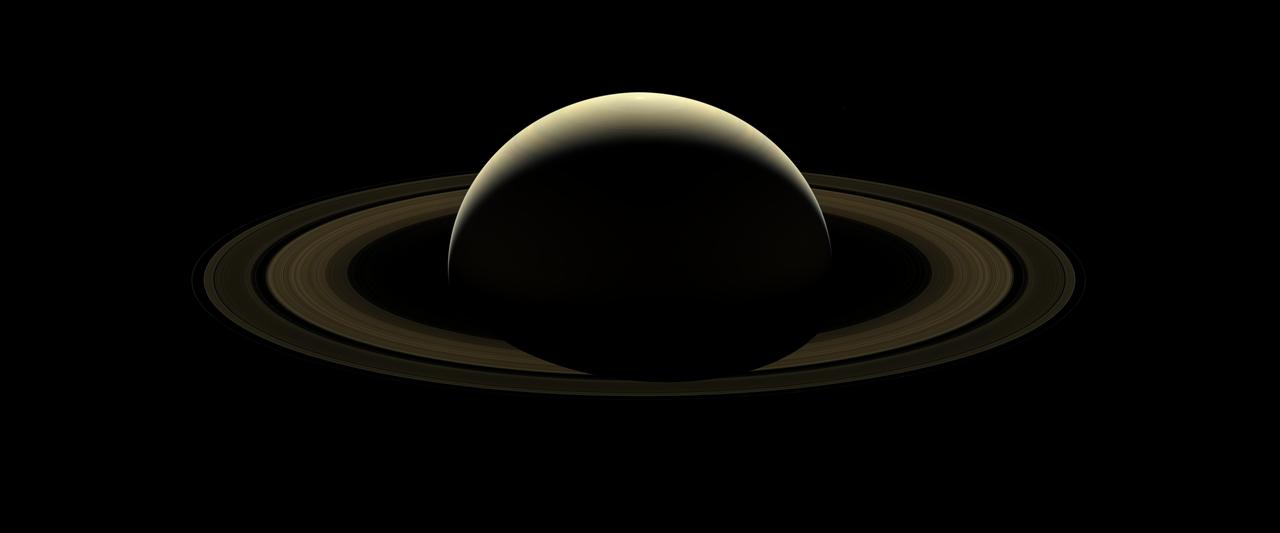
Saturn is the least dense planet; on average it is less dense than water. Its rings, made of countless chunks of ice and rock, stretch hundreds of thousands of kilometers across yet are only meters thick in many places. It has more known moons than any other planet, including Titan, with its orange haze, and Enceladus, which sprays water into space. Even a small telescope shows the rings clearly, and the sight tends to stick with people.

Related: Titan, Enceladus, Jupiter

Play Which planet am I? →

Star

Sirius

The brightest star in the night sky, in the constellation Canis Major.

Distance
about 8.6 light-years
Apparent magnitude
−1.46
Constellation
Canis Major
Companion
Sirius B, a white dwarf
Read more

Sirius shines so brightly because it is a bluish-white star about 25 times more luminous than the Sun, and also fairly close by. It has a companion, Sirius B, a white dwarf: the spent core of a star that has used up its fuel. Ancient Egyptians watched for Sirius's first appearance before dawn because it came around the time of the Nile floods. To find it, follow the line of Orion's Belt down and to the left.

Related: Canis Major, Orion, Apparent magnitude, White dwarf

Play Which planet am I? →

Star

Sun

The star at the center of the solar system: a ball of hot gas holding more than 99% of its mass.

Diameter
about 1.39 million km
Surface temperature
about 5,500 °C
Age
about 4.6 billion years
Light travel time to Earth
about 8 min 20 s

Image: NASA/GSFC/Solar Dynamics Observatory

Read more

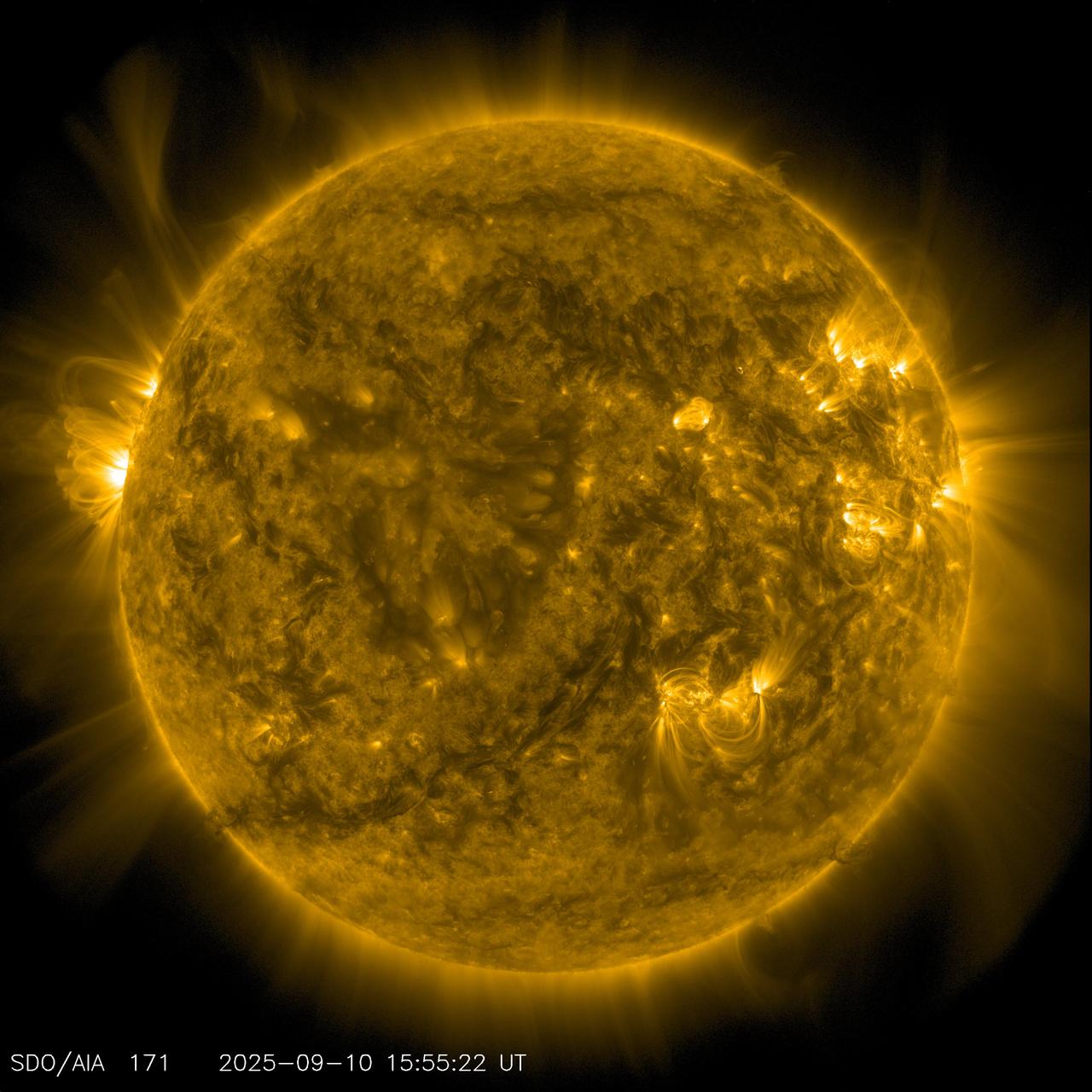
The Sun is an ordinary star, a yellow dwarf. In its core, hydrogen fuses into helium and releases the energy that lights and warms us; every second it turns about 4 million tonnes of matter into energy. Its activity rises and falls in cycles of about 11 years, with more or fewer sunspots. Sunlight takes about 8 minutes to reach Earth. Never look at it directly, or through binoculars or a telescope, without a certified solar filter.

Related: Earth, Solar eclipse, Yellow dwarf, Astronomical unit

Play Which planet am I? →

Astronomy

Solstice

The two days of the year when the Sun reaches its farthest point north or south in the sky.

Dates
around June 20–21 and December 21–22
Read more

Because Earth's axis is tilted, the noon Sun climbs and sinks in the sky over the year. At the June solstice it reaches its northernmost point: the longest day in the Northern Hemisphere and the start of astronomical summer there. The December solstice is the reverse, the shortest day in the north and the longest in the south. The word comes from Latin for “Sun standing still,” since its path seems to pause before turning back.

Related: Equinox, Ecliptic, Earth

Astronomy

Supermoon

A popular name for a full moon that happens when the Moon is near its closest point to Earth.

Distance at perigee
about 356,000 to 370,000 km
Distance at apogee
about 404,000 to 407,000 km
Read more

The Moon's orbit is not a perfect circle: its closest point to Earth is perigee and its farthest is apogee. When a full moon lands near perigee, it looks a bit larger and brighter, up to about 14% bigger and 30% brighter than a full moon at apogee. “Supermoon” is not a technical term and has no official definition. The difference is hard to notice by eye; the Moon looks huge near the horizon because of an optical illusion, supermoon or not.

Related: Moon, Lunar phase

Zodiac constellation

Taurus

The zodiac bull, with its red eye Aldebaran and the Pleiades cluster on its back.

Brightest star
Aldebaran
Best season (Northern Hemisphere, evenings)
late autumn and winter (Nov–Feb)
Visibility
both hemispheres
Read more

The bull's face is a V-shaped group of stars, the Hyades cluster, with Aldebaran, an orange giant, shining at one tip as its eye. On its back ride the Pleiades, a cluster of young stars that looks to the naked eye like a small cloud with six or seven points; many cultures have used them to mark the seasons. Taurus also holds the Crab Nebula, the remains of a supernova seen in the year 1054.

Related: Orion, Gemini, Auriga, Nebula

Play Hidden constellation →

Music

Tempo and BPM

The speed of a piece of music, measured in beats per minute (BPM).

Example
60 BPM = one beat per second
Read more

Tempo is how fast a song's pulse goes, the beat you tap your foot to without thinking. It is measured in BPM, beats per minute: at 60 BPM there is one beat per second; at 120, two. Classical scores also use Italian words such as adagio (slow), andante (at a walking pace) or allegro (fast). To practice at a steady tempo, musicians use a metronome, a device or app that clicks on every beat. Music software and DJ tools display BPM to help match songs.

Related: Time signature, Polyrhythm, MIDI, Rhythm

Planet

Earth

Our home: the third planet from the Sun and the only world where life is known to exist.

Diameter
about 12,742 km
Mean distance from the Sun
about 150 million km (1 AU)
Axial tilt
about 23.4°
Moons
1

Image: NASA/NOAA/GSFC/Suomi NPP/VIIRS/Norman Kuring

Read more

Earth is the densest planet in the solar system and the only one with stable liquid water on its surface; oceans cover nearly three quarters of it. An atmosphere rich in nitrogen and oxygen shields us and shapes the climate. The planet's axis is tilted about 23.4°, which is why we have seasons: through the year, each hemisphere takes turns facing the Sun more directly. The average Earth–Sun distance is so handy that astronomers use it as a unit, the astronomical unit.

Related: Moon, Sun, Astronomical unit, Solstice

Play Which planet am I? →

Music

Timbre

The quality that lets us tell two instruments apart even when they play the same note at the same volume.

Read more

A guitar and a flute can play the same A at the same loudness and you still know which is which instantly. That difference is timbre, the “color” of a sound. It depends mostly on harmonics, the extra frequencies riding along with the main note, and on how the sound changes over time: how it starts, sustains and fades. Human voices have their own timbre too, which is why you recognize someone on the phone. Synthesizers let you sculpt brand-new timbres.

Related: Harmonics, Note, MIDI, Reverb

Moon

Titan

Saturn's largest moon, with a thick atmosphere and lakes of liquid methane.

Diameter
about 5,150 km
Planet
Saturn
Landing
Huygens probe, 2005

Image: NASA/JPL-Caltech/Space Science Institute

Read more

Titan is the only moon with a thick atmosphere, denser than Earth's, wrapped in an orange haze. It is so cold that methane and ethane are liquid there: they fall as rain, carve rivers and fill lakes and seas near the poles. In 2005 the European Huygens probe, carried by the Cassini mission, landed on its surface. NASA is preparing Dragonfly, a drone that will hop between sites to study Titan's chemistry.

Related: Saturn, Enceladus, Ganymede

Play Which planet am I? →

Music

Key

The home note and scale a piece of music revolves around, such as C major or A minor.

Example
C major and A minor share the same notes (they are relative keys)
Read more

A song's key tells you its home note, the one that sounds like rest, and which scale it uses. A piece in G major revolves around G and uses the G major scale, which is why it feels finished when it lands back on that chord. The key signature, the sharps or flats at the start of the staff, shows the key. Shifting to another key mid-song is called modulating, and bumping it up a step near the end is a classic pop move.

Related: Major scale, Chord, Scale

Moon

Triton

Neptune's largest moon: it orbits backwards and has nitrogen geysers.

Diameter
about 2,707 km
Planet
Neptune
Visit
Voyager 2, 1989

Image: NASA/JPL/USGS

Read more

Triton is among the coldest places ever measured in the solar system. It circles Neptune in the opposite direction to the planet's spin, which no other large moon does; that is why scientists think it was captured from the Kuiper Belt and is a cousin of Pluto. When Voyager 2 flew by in 1989, its only visit so far, it spotted geysers blowing nitrogen gas and dark dust.

Related: Neptune, Pluto, Kuiper Belt

Play Which planet am I? →

Astronomy

Astronomical unit

The average distance between Earth and the Sun, used to measure the solar system.

Value
149,597,870.7 km (about 150 million km)
Symbol
au (also AU)
Read more

Measuring the solar system in kilometers gives numbers that are hard to picture, so astronomers use the Earth–Sun distance as a ruler. One astronomical unit is nearly 150 million kilometers; since 2012 the International Astronomical Union has fixed it at an exact value. With it, things click: Jupiter is about 5.2 au from the Sun, Neptune about 30, and Pluto, on average, about 39.5. Sunlight takes about 8 minutes 20 seconds to cross one au.

Related: Earth, Sun, Light-year

Planet

Uranus

A blue-green ice giant that spins on its side, its axis tilted almost 98 degrees.

Equatorial diameter
about 51,118 km
Mean distance from the Sun
about 2.87 billion km
Length of year
about 84 Earth years
Discovery
1781, by William Herschel

Image: NASA/JPL-Caltech

Read more

Uranus was the first planet found with a telescope. Methane in its atmosphere soaks up red light, leaving a blue-green glow. Its strangest trait is the tilt: it rolls around the Sun almost on its side, possibly after a giant collision long ago. Over its 84-year orbit, each pole gets about 42 years of daylight followed by 42 years of night. Only Voyager 2 has visited, in 1986. Under very dark skies it sits right at the edge of naked-eye visibility.

Related: Neptune, Saturn

Play Which planet am I? →

Planet

Venus

Almost Earth's size, wrapped in acid clouds, with the hottest surface in the solar system.

Diameter
about 12,104 km
Mean distance from the Sun
about 108 million km
Surface temperature
about 465 °C

Image: NASA/JPL

Read more

Venus is close to Earth in size but nothing like home. Its thick carbon dioxide atmosphere traps heat so well that the ground sits near 465 °C, hotter than Mercury. The clouds are made of sulfuric acid. Venus spins backwards compared to most planets, and so slowly that its day (243 Earth days) outlasts its year (225 days). After the Moon it is the brightest object in the night sky, often called the morning or evening star.

Related: Mercury, Earth, Elongation, Apparent magnitude

Play Which planet am I? →

Astronomy

Milky Way

Our galaxy: a barred spiral with hundreds of billions of stars, the Sun among them.

Diameter
about 100,000 light-years
Sun's distance from the center
about 26,000 light-years
Sun's orbit around the center
about 230 million years
Read more

On a moonless night far from city lights, a milky band arcs across the sky: the Milky Way seen from the inside, since we live in one of its arms. The name comes from a Greek myth about spilled milk. It is a spiral galaxy with a central bar, and at its heart, toward Sagittarius, lies a black hole of about 4 million solar masses called Sagittarius A*. From the Northern Hemisphere it looks brightest on summer nights.

Related: Galaxy, Sagittarius, Cygnus, Andromeda

Music

Vibrato

A gentle, regular wavering in a note's pitch that makes it sound warmer and more expressive.

Typical rate
about 5 to 7 cycles per second
Read more

When a singer holds a long note, they often let it waver slightly up and down: that is vibrato. Violinists produce it by rocking a finger on the string, guitarists by shaking or bending the string, and synthesizers with a slow oscillator that modulates pitch. Do not confuse it with tremolo, which varies volume rather than pitch. Controlled vibrato adds warmth; overdone, it can sound unsteady.

Related: Timbre, Frequency, Note

Technology

Wi-Fi

The technology that connects devices to a network and the internet without cables, using radio waves.

Common bands
2.4 GHz, 5 GHz and 6 GHz
Technical standard
IEEE 802.11 family
Read more

Wi-Fi uses radio waves so your phone, laptop or TV can talk to a router, which in turn connects to the internet. The 2.4 GHz band reaches farther and gets through walls better; 5 and 6 GHz are faster but have shorter range. Each new generation, such as Wi-Fi 6 or Wi-Fi 7, improves speed and handles more devices at once. To protect your network, use a strong password and WPA2 or, better, WPA3 encryption.

Related: Encryption, Hertz (Hz), The cloud

Music

Xylophone

A percussion instrument with wooden bars of different sizes, struck with mallets.

Family
pitched percussion
Close relative
the marimba
Read more

The name comes from Greek for “wood sound.” Its bars are laid out like piano keys: long bars sound low and short ones high. It is played with hard mallets, which give it a bright, dry tone. The marimba, central to music in southern Mexico and Guatemala, is a relative with wider bars, a lower range and resonator tubes underneath that let notes ring longer. Toy versions with metal bars are, strictly speaking, metallophones.

Related: Timbre, Note, Major scale

Technology

XML

A language for storing and sharing structured data with tags, readable by both people and machines.

Stands for
eXtensible Markup Language
W3C Recommendation
1998
Read more

XML organizes information with tags in angle brackets, like <title> and </title>, similar to HTML. The difference is that XML has no fixed set of tags: you define whatever you need to describe your data, which makes it very flexible. It powers SVG graphics, RSS news feeds and modern Word and Excel files, which are zipped bundles of XML inside. Many newer web apps prefer the lighter JSON format, but XML is still everywhere.

Related: HTML, Vector graphic, API

Astronomy

Yarkovsky effect

A tiny push asteroids get from re-emitting the Sun's heat, which shifts their orbits over the years.

Named after
Ivan Yarkovsky, an engineer who proposed it around 1900
Read more

A spinning asteroid warms up during its day and releases that heat a little later, in its “afternoon.” That thermal glow leaves more strongly in one direction and creates a minuscule thrust, like a very feeble engine. Over a day it is nothing, but over thousands or millions of years it can shift an orbit noticeably. That is why it is included when predicting whether a near-Earth asteroid could come close in the future; NASA's OSIRIS-REx mission measured it on asteroid Bennu.

Related: Asteroid, Ceres, Sun

Astronomy

Zodiac

The band of sky the Sun, Moon and planets travel through, and the constellations along it.

Constellations crossed by the ecliptic
13, counting Ophiuchus
Examples
Taurus, Gemini, Leo, Scorpius, Sagittarius
Read more

Because the planets orbit in nearly the same plane, the Sun, Moon and planets always appear within a narrow band around the ecliptic. That band is the zodiac. It is traditionally split into twelve parts, but the ecliptic actually crosses thirteen official constellations, including Ophiuchus. Note that astrology's zodiac signs do not match the constellations: the slow wobble of Earth's axis has shifted the dates, and astrology is not a science.

Related: Ecliptic, Leo, Taurus, Scorpius

Astronomy

Habitable zone

The region around a star where a planet could have liquid water on its surface.

Read more

Too close to its star, a planet's water boils away; too far, it freezes. In between lies the habitable zone, nicknamed the Goldilocks zone: not too hot, not too cold. Its location depends on the star. Around red dwarfs such as Proxima Centauri it sits very close in; around hotter stars, much farther out. Being in the habitable zone does not guarantee water or life, since atmosphere, planet size and stellar activity matter too. Earth sits inside the Sun's.

Related: Exoplanet, Proxima Centauri, Earth, Yellow dwarf